
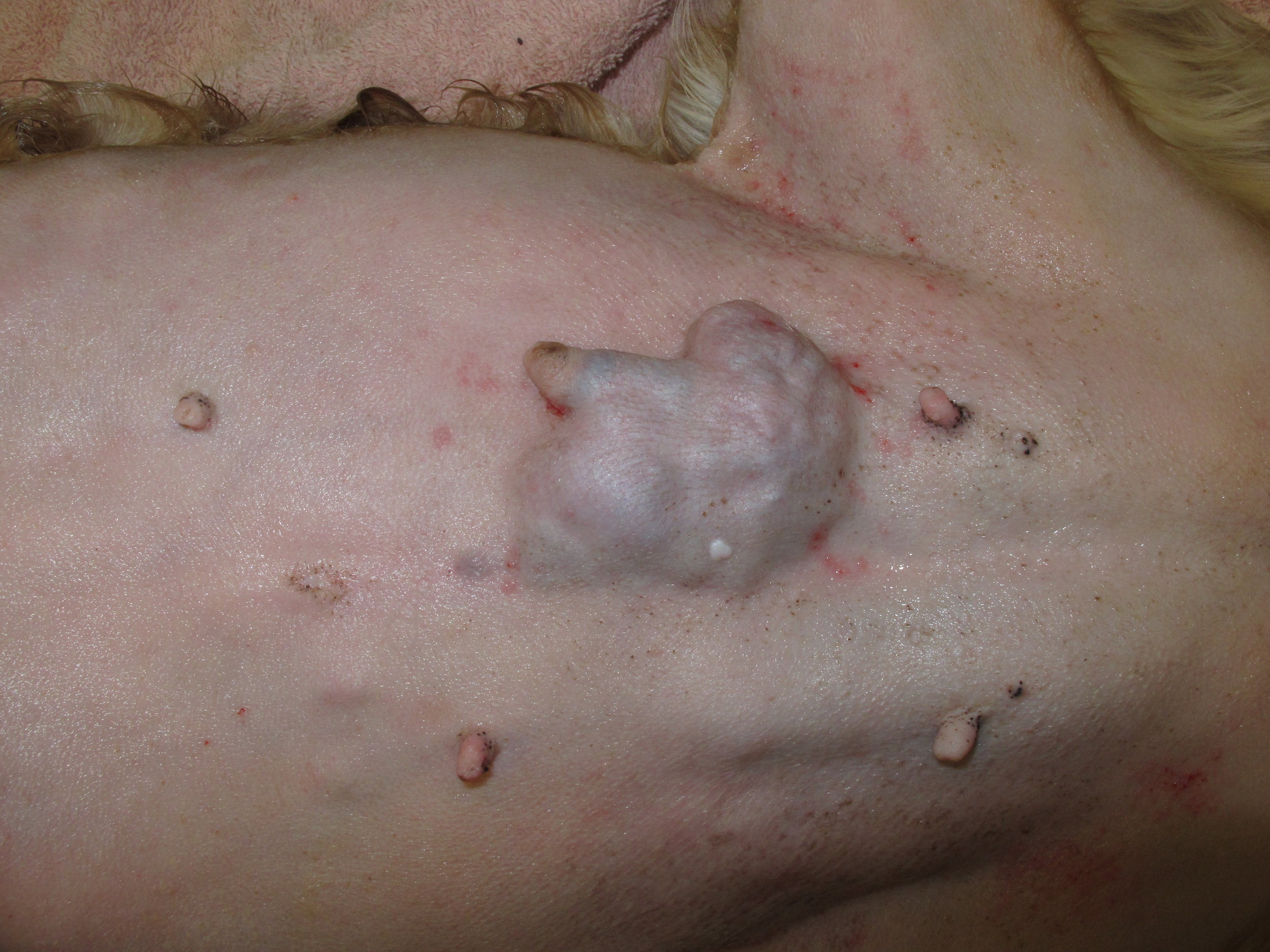
Mammary Neoplasia
Surgical excision is frequently recommended as a primary treatment for mammary neoplasia. In cases of mammary tumors, the extent of surgery depends on factors such as tumor size, location and malignancy. Mastectomy, involving the removal of affected mammary glands, is the most common procedure. A study by L. Zatloukalova et al. (2020)1 emphasized the importance of complete surgical excision for improved outcomes in canine mammary tumors. We will advise on appropriate pre-surgical staging and biopsy for these cases on a case by case basis.

Mast Cell Tumors
Mast cell tumors (MCTs) are a prevalent neoplastic condition in dogs and surgical intervention is often the mainstay of treatment. The evolution of treatment strategies in this area is ever changing and there are now multiple options including oral medications, injectable medication and a combination of these two with surgery to enhance cure rates. Wide surgical excision with clear margins is crucial for reducing the risk of recurrence and metastasis. As a result many of these cases will require advanced surgical advancement techniques. The study by M. Vascellari et al. (2018)2 highlighted the significance of surgical margins in the management of MCTs, emphasizing the importance of achieving complete removal to enhance long-term survival.
Dermal Neoplasia
In addition to MCTs, we are often dealing with soft tissue sarcomas in dogs and squamous cell carcinoma in cats. Techniques, such as surgical advancement flaps, become especially useful when dealing with larger tumours or in areas where primary closure may be challenging. These flaps aid in preserving a functional and cosmetically acceptable outcome.
Postoperative Care
Postoperative care is critical for the successful recovery of dogs undergoing soft tissue surgeries for neoplasia. This includes pain management, monitoring for signs of infection or dehiscence and close follow-up to assess the healing process. Owners should be educated on at-home care and alerted to any concerning changes in the surgical site. Please find our client information sheet here.
References
- Zatloukalova, L., et al. (2020). Canine mammary tumors: Pathology and prognosis of 139 cases. Veterinary Pathology, 57(3), 446-457.
- Vascellari, M., et al. (2018). Prevalence of tumour disease in the dog: Analysis of the 2004–2008 data. Veterinary Journal, 184(3), 346-350.
