
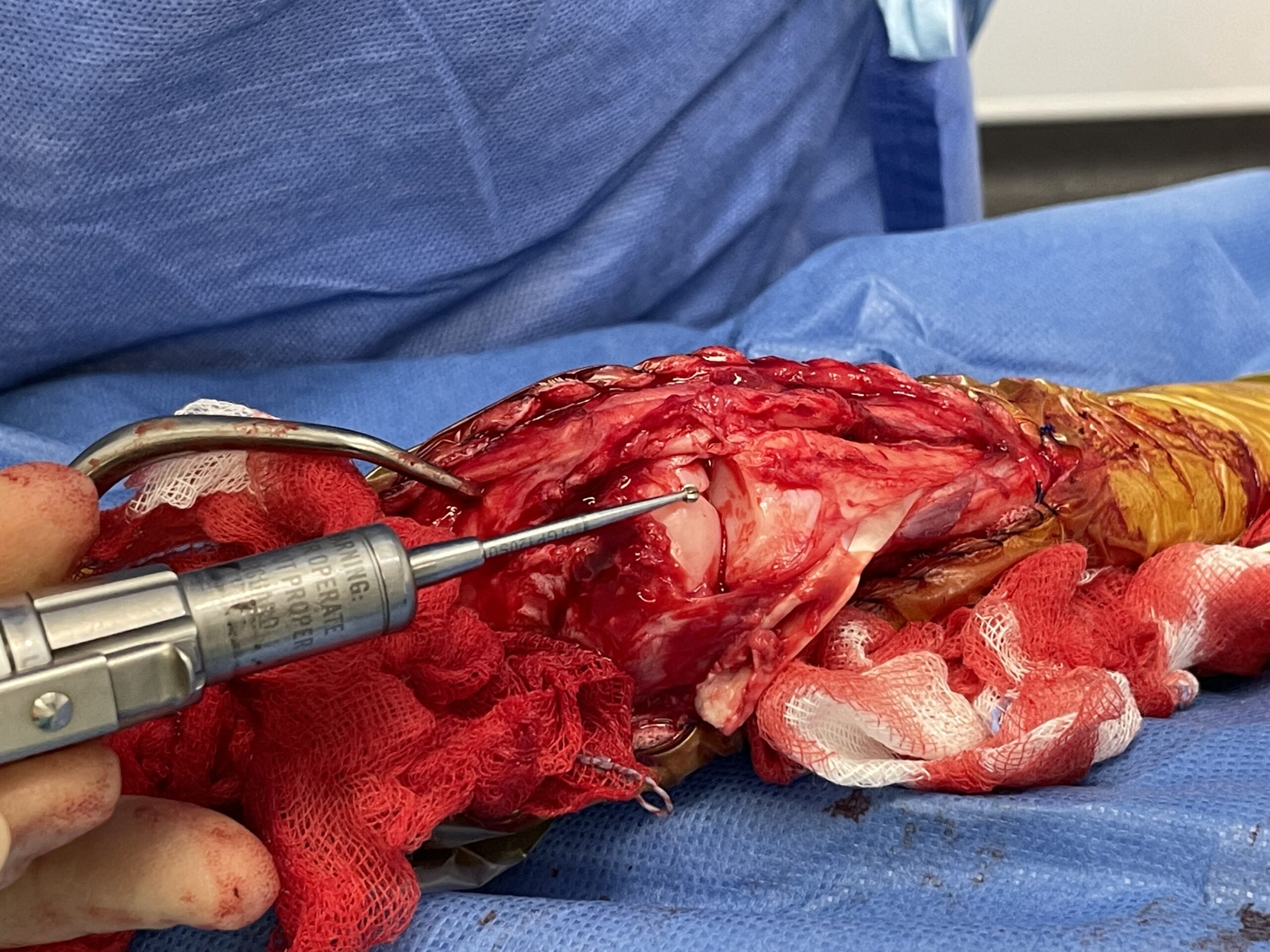
Arthrodesis Surgery
The surgical procedure involves removing the cartilage and other tissues from the joint surfaces using a high speed burr before immobilising the bone fragments in place using various techniques. This can be achieved with the use of screws, pins and plates. Plates designed specifically for the tarsal and carpal joints are often utilised in these locations to help optimise outcomes.We often use autografts (bone from the patient’s own body) or allografts (bone from a donor) to encourage healing across the joint space.Following surgery a support dressing will be applied for a short period of time to minimise post operative swelling and to protect the surgical site. Routine crate rest will also apply.
X-rays will be required 6-8 weeks following surgery to check for signs of fusion.
What are the potential complications?
Like any surgical procedure, arthrodesis is associated with potential risks and complications. These include infection, non-union (failure of bones to fuse), nerve damage, and implant failure. It is important the owner follows the post operative care to minimise the risks. You can read more on Groot’s story via our Instagram page.
Related Resources

Subscribe to our newsletter
We won't share your details with any third parties