
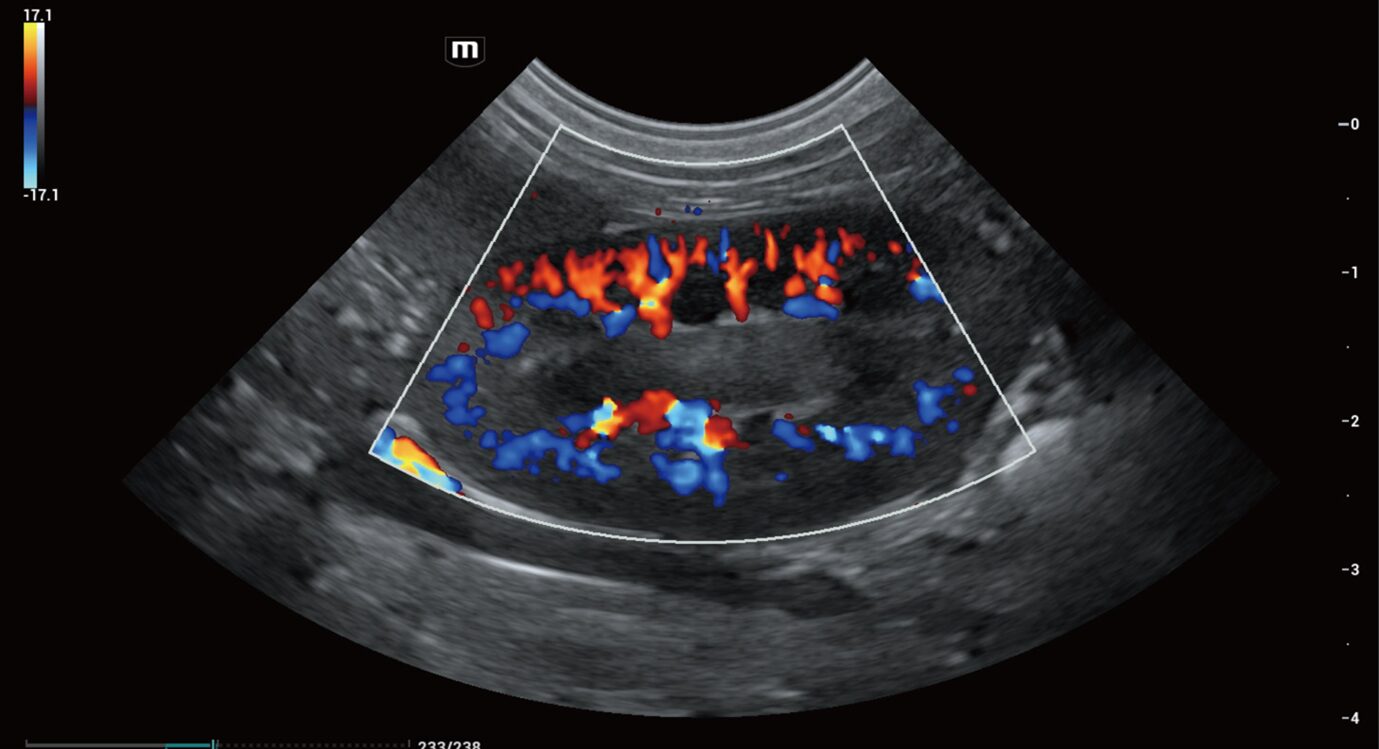
 Colour doppler interrogation of the renal vasculature
This involves a comprehensive assessment of all abdominal organs, including the gastrointestinal tract, liver, spleen, pancreas, urinary tract, adrenal glands, reproductive organs, and regional lymph nodes.
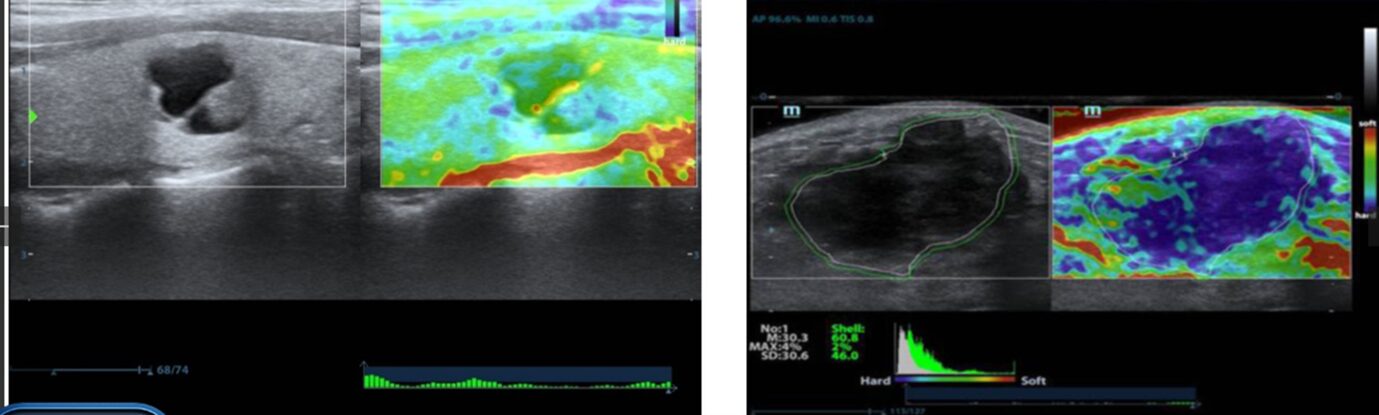 Splenic elastography used to aid clinical decision making
Common indications for abdominal ultrasound include:
- Increased liver parameters with or without increased bile acid stimulation test results
- Increased kidney parameters or suspected renal disease
- Elevated pancreatic markers or suspected pancreatitis
- Suspected gastrointestinal foreign body or obstruction
- Suspected primary adrenal disease (approximately 15% of Cushing’s cases are adrenal-dependent)
- Abdominal masses or unexplained abdominal pain
- Urinary and reproductive tract assessment – PU/PD, incontinence, haematuria, prostatic disease
- Chronic vomiting and/or diarrhoea
- Neoplastic staging – assessment of liver, spleen and regional lymph nodes
- Investigation of abdominal effusion
Where appropriate, ultrasound can also be used to guide fine needle aspirates or sampling of organs and masses during the same procedure.
